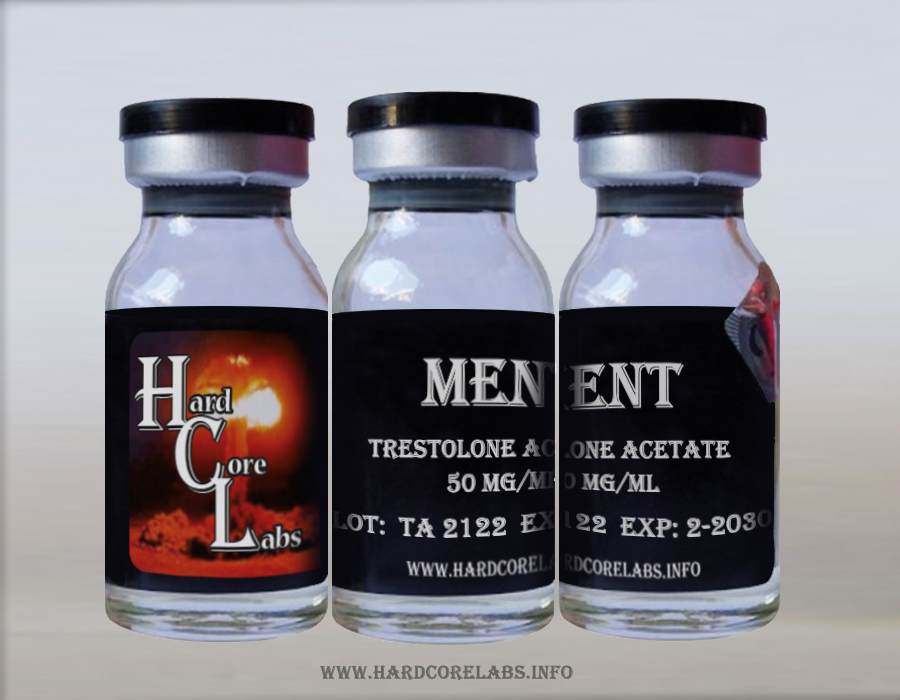
Ment
Trestolone Acetate, commonly referred to by its abbreviation MENT, is a synthetic anabolic androgenic steroid known for its extreme potency and rapid activity in the body. Chemically, it is 7α-methyl-19-nortestosterone, a modification of nandrolone and testosterone that results in a compound with unique properties and a power profile that places it in a class of its own. The addition of a methyl group at the 7-alpha position prevents MENT from being metabolized by the enzyme 5-alpha reductase, which normally converts testosterone into dihydrotestosterone or DHT. This alteration makes MENT resistant to certain metabolic pathways and significantly enhances its androgenic and anabolic effects.
Unlike testosterone, which is subject to regulation by both aromatase and 5-alpha reductase enzymes, MENT is not broken down into weaker or stronger derivatives. Instead, it remains highly active in its original form. It does, however, aromatize into a potent estrogen, which is one of the defining traits of this compound. Users can expect a significant rise in estrogenic activity when using MENT, sometimes even more pronounced than with testosterone. This characteristic makes it a compound that must be handled carefully, as it can quickly lead to estrogen-related side effects such as gynecomastia, water retention, elevated blood pressure, and mood instability if not properly controlled with aromatase inhibitors.
The acetate ester attached to MENT gives it a short half-life, typically in the range of one to three days, depending on the individual’s metabolism and injection frequency. Because of this rapid clearance, MENT Acetate requires frequent administration, usually daily or every other day, to maintain stable blood concentrations. Some users opt for more advanced delivery systems, such as transdermal gels or implants, but in bodybuilding and performance circles, it is most commonly administered through intramuscular injection. The acetate ester allows users to see effects quickly, often within the first few days of use, which makes it appealing for short-term strength and mass cycles or experimental protocols where quick onset is desired.
Trestolone is known for its incredible anabolic and androgenic potency. Anecdotally and in limited research settings, it is often described as being more potent than testosterone by a factor of several times. This means that even relatively low doses can produce significant increases in muscle mass, strength, aggression, and overall performance. It promotes rapid protein synthesis, increased nitrogen retention, enhanced red blood cell production, and dramatic improvements in muscular endurance and recovery. These effects make MENT particularly attractive for powerlifters, strength athletes, and bodybuilders seeking to push past performance plateaus or achieve rapid gains over short periods.
However, MENT is not a mild compound. Its power comes with a cost. The androgenic side effects can be considerable, especially in individuals sensitive to hormone fluctuations. Users may experience oily skin, acne, increased facial and body hair growth, and accelerated hair loss if predisposed to male pattern baldness. Libido is usually heightened dramatically during the initial phase of use but can crash hard post-cycle due to the compound’s suppressive nature. Unlike many other steroids, MENT does not merely suppress natural testosterone production—it effectively shuts it down completely. This is because MENT provides all the androgenic signaling the body perceives as sufficient, removing any biological drive to continue producing endogenous testosterone. As a result, users who run MENT without test base support are at risk of sexual dysfunction, fatigue, and hormonal imbalance after cessation.
MENT’s aromatization into a strong estrogen is also a double-edged sword. On one hand, the estrogenic activity helps support muscle growth and joint health, which is often lost on dry compounds like Masteron or Winstrol. On the other hand, unchecked estrogen levels can lead to serious complications, including gynecomastia, mood swings, excessive water retention, and increased risk of cardiovascular issues. Most users stack MENT with a potent aromatase inhibitor, such as letrozole or exemestane, to mitigate these effects. Even with AI use, estrogen control can be challenging due to the compound’s sheer aromatization potential, and over-suppression can bring its own set of problems, such as joint pain and low libido.
Because of its strength and the severity of suppression it causes, MENT is not commonly used for long durations. Cycles are usually kept short, often around four to six weeks, especially when used as a standalone or at higher doses. Longer-term use typically requires exogenous testosterone to maintain baseline androgen function and prevent complete endocrine shutdown. Recovery after a MENT cycle can be difficult, and users often require a more aggressive post-cycle therapy protocol than they would with milder compounds. Clomiphene and tamoxifen may be used in combination, often alongside human chorionic gonadotropin (hCG) to kick-start the testes into producing testosterone again after complete suppression.