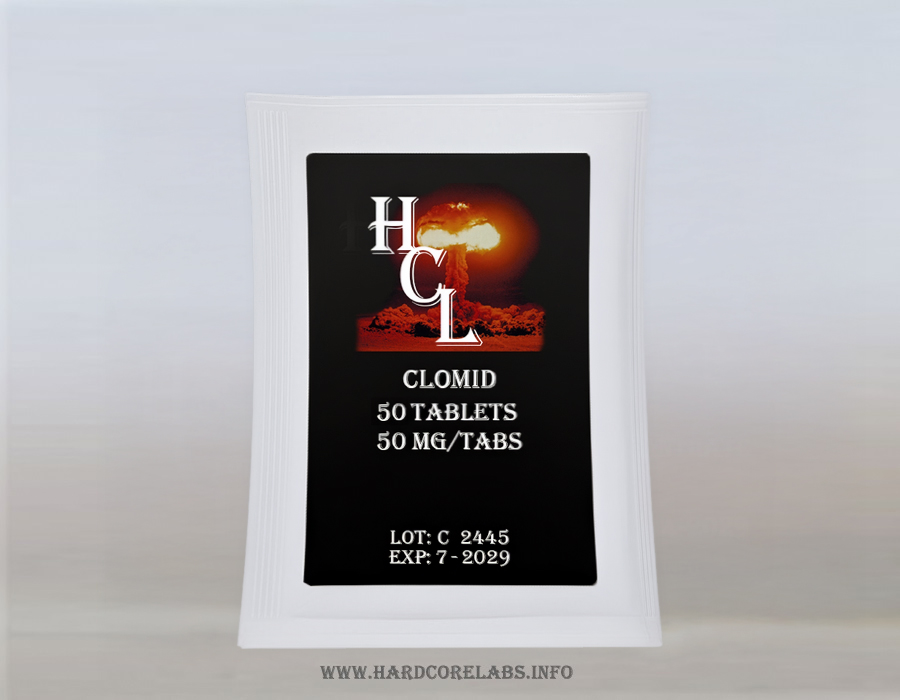
Clomid
Clomid, known by its generic name clomiphene citrate, is a selective estrogen receptor modulator originally developed for use in fertility medicine, primarily prescribed to women experiencing ovulatory dysfunction. However, its unique mechanism of action—specifically its ability to interfere with estrogen’s feedback loop at the level of the hypothalamus and pituitary gland—has made it a mainstay compound in the world of bodybuilding and performance enhancement, where it is most often used during post-cycle therapy to assist in the recovery of natural testosterone production following a period of anabolic steroid use.
To understand Clomid’s role in bodybuilding, it’s important to consider the basic hormonal dynamics that are disrupted during an anabolic cycle. When synthetic androgens such as testosterone, nandrolone, or trenbolone are introduced into the body at supraphysiological levels, the body detects an excess of androgens in the bloodstream. In response, the hypothalamic-pituitary-gonadal axis downregulates the natural production of luteinizing hormone (LH) and follicle-stimulating hormone (FSH), which are necessary signals for the testes to produce testosterone and sperm. This results in suppressed endogenous testosterone production, which can remain low even after the cycle ends, particularly if the compounds used were long-acting or highly suppressive.
Clomid functions by binding to estrogen receptors in the hypothalamus and blocking estrogen’s normal feedback signal. Under normal physiological conditions, when estrogen levels rise, the hypothalamus detects this and reduces the release of gonadotropin-releasing hormone (GnRH), which in turn lowers LH and FSH output from the pituitary. Clomid interferes with this detection by occupying estrogen receptors and tricking the hypothalamus into perceiving low estrogen levels, even when serum estrogen is normal or elevated. This leads to an increase in GnRH secretion, which stimulates the anterior pituitary to produce more LH and FSH, thereby encouraging the testes to resume natural testosterone production.
In the context of bodybuilding, Clomid is typically introduced after a steroid cycle ends, as part of a broader post-cycle therapy protocol. Its primary purpose is to restore the body’s ability to produce testosterone endogenously, helping to stabilize hormone levels, maintain muscle mass gained during the cycle, and prevent symptoms of hypogonadism that can occur when natural testosterone is low. The faster natural production resumes, the more likely the user is to retain strength, size, and overall well-being during the transitional period between cycles.
Clomid is often compared to another SERM, tamoxifen citrate, known as Nolvadex, and the two are sometimes used together or interchangeably during PCT. While both operate on the same principle of estrogen receptor antagonism in the hypothalamus, Clomid tends to produce a stronger stimulation of LH and FSH, particularly when used at the beginning of PCT. Because of this, it is sometimes favored during the initial phase of post-cycle recovery, especially following cycles involving harsh suppression. It has a long half-life—typically around five to seven days—which allows for steady-state levels to build with consistent dosing and provides a prolonged effect even as administration is tapered down over time.
In practice, Clomid is commonly started within a few days after the last injection of short-estered compounds, or after the clearance time of long-acting esters like testosterone enanthate or decanoate-based compounds has passed. Timing is critical, as introducing it too early—while exogenous androgens are still active—may lead to limited efficacy, as the feedback suppression is still in effect. Conversely, delaying PCT too long can allow testosterone levels to drop significantly, leading to muscle loss, lethargy, and hormonal imbalance. Clomid helps bridge this gap by prompting the endogenous system to resume activity just as exogenous levels are declining.
Although Clomid does not directly enhance muscle growth, strength, or performance, its role in bodybuilding is vital because it enables the user to retain the physiological gains made during a cycle. The hormonal rebound provided by Clomid contributes to maintaining a favorable testosterone-to-estrogen ratio during the recovery window, which supports lean mass retention, improved mood, libido restoration, and general endocrine stability. In cycles where aromatizing compounds were used and estrogen levels rose significantly, Clomid can also help to normalize the estrogen-to-androgen balance indirectly by promoting testosterone recovery and encouraging the body to reestablish hormonal homeostasis.
Clomid can also be used in low doses in-between cycles by certain users as part of a “bridging” strategy, where the goal is to keep endogenous testosterone from crashing entirely during periods off-cycle without fully shutting down the system again through the use of injectables. In such cases, it may be employed every few days or on a rotating schedule to pulse LH and FSH intermittently, keeping the testes active and preventing full suppression. This approach is more common among advanced users with extensive cycle history who are looking for long-term endocrine management without full-time suppression.
In recent years, some competitive bodybuilders have also used Clomid during the off-season to maintain fertility and testicular function while on low-dose testosterone replacement or cruising protocols. By introducing it intermittently, they aim to prevent the complete shutdown of spermatogenesis and keep natural hormonal function from becoming dormant over long durations of enhanced use. Although not as common as traditional PCT usage, this fertility-conscious application reflects an evolving understanding of Clomid’s ability to preserve pituitary signaling even in the presence of exogenous hormones.
Clomid’s role in bodybuilding is not one of building, shredding, or enhancing in the direct sense—it is a recovery tool, a transitional agent, and a hormonal stabilizer. It functions behind the scenes, reactivating the body’s internal testosterone factory after a cycle, helping to preserve the muscle and performance gains that were made during the enhancement phase. For many, it represents the closing chapter of a well-structured anabolic plan, ensuring that the system resets and is prepared for either long-term hormonal health or the next performance phase, depending on the individual’s goals.